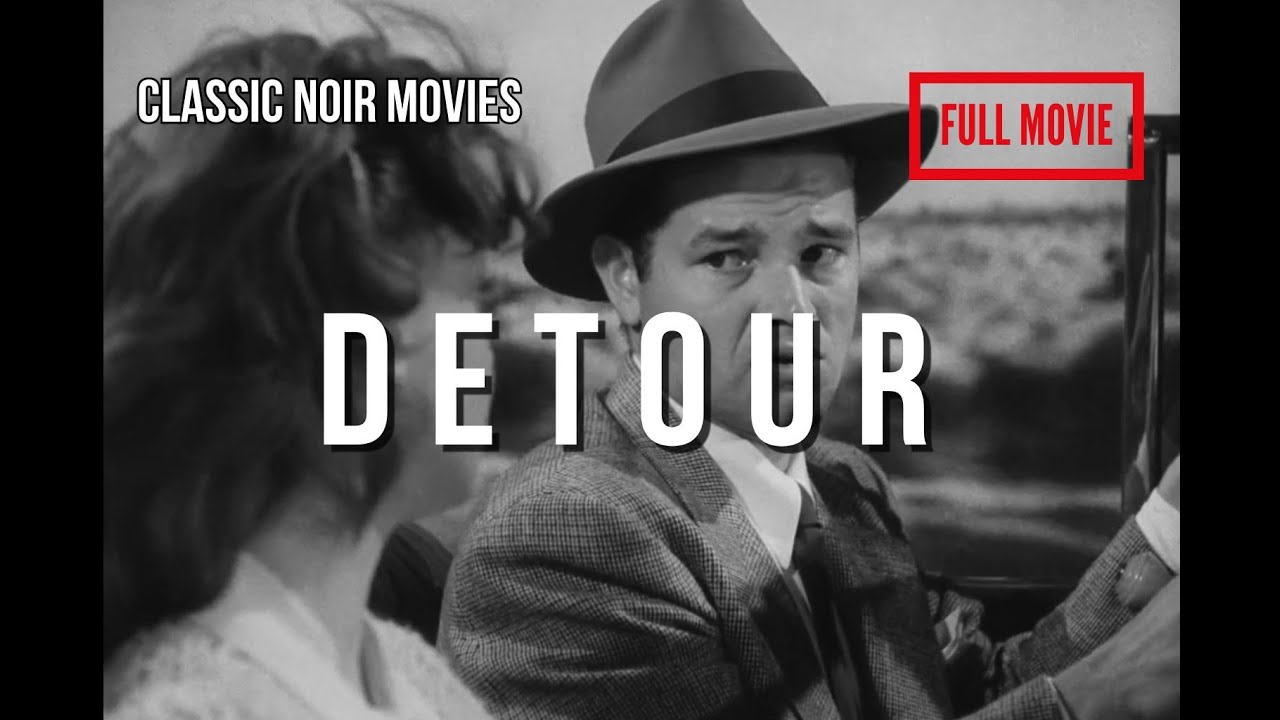
Detour (1945) A Fatalistic B-Movie Nightmare
When it comes to low-budget filmmaking, Edgar G. Ulmer is honestly one of my absolute favorite directors because of what he could achieve with almost zero money. This 1945 masterpiece stands as arguably the most relentless, pitch-black road movie ever put on celluloid. The story tracks Al Roberts (Tom Neal), a cynical, tragic New York nightclub pianist who decides to hitchhike across the country just to join his girlfriend in Hollywood. He has no money, no prospects, and nothing but a bleak outlook on life. His miserable journey takes a terrifying turn somewhere in Arizona when a wealthy, mysterious driver named Charles Haskell picks him up. During a heavy night drive through the desert, Haskell suddenly and mysteriously dies in the passenger seat. Roberts completely panics. Realizing his desperate situation, and believing the police will never buy the innocence of a penniless hitchhiker, he makes a fatal mistake. He hides the body in the brush, steals the car, takes the dead man’s cash, and assumes his identity.
From that exact second, his fate is sealed by pure cinematic bad luck. My favorite part of the entire narrative happens when Roberts stops at a gas station and picks up another desperate hitchhiker named Vera (played by Ann Savage). It turns out Vera is a savage, coughing, and deeply bitter femme fatale who actually rode with the real Charles Haskell just a day prior. She instantly sees right through Roberts’ weak lie, catches him using a dead man’s driving license, and relentlessly blackmails him. Instead of running, she forces him into a claustrophobic, high-stakes hotel room scam, dragging him down into an even deeper, inescapable psychological hole where every choice leads to destruction.
When it comes to low-budget filmmaking, Edgar G. Ulmer is honestly one of my absolute favorite directors because of how he could turn severe financial limitations into pure stylistic dread. Unable to afford proper outdoor locations or expensive car setups, Ulmer relies heavily on thick, artificial studio fog, cheap rear-projections, and heavy expressionistic shadows to drown out the claustrophobic car interiors. In my opinion, this lack of money actually saved the film from mediocrity. It completely drops any sense of polished Hollywood glamour, replacing it with a raw, sweat-stained paranoia that perfectly captures the hopeless, cynical core of the entire noir genre.
I hope you enjoyed my personal breakdown of this legendary, ultra-low-budget masterpiece—dim the lights, hit play, and enjoy the movie!