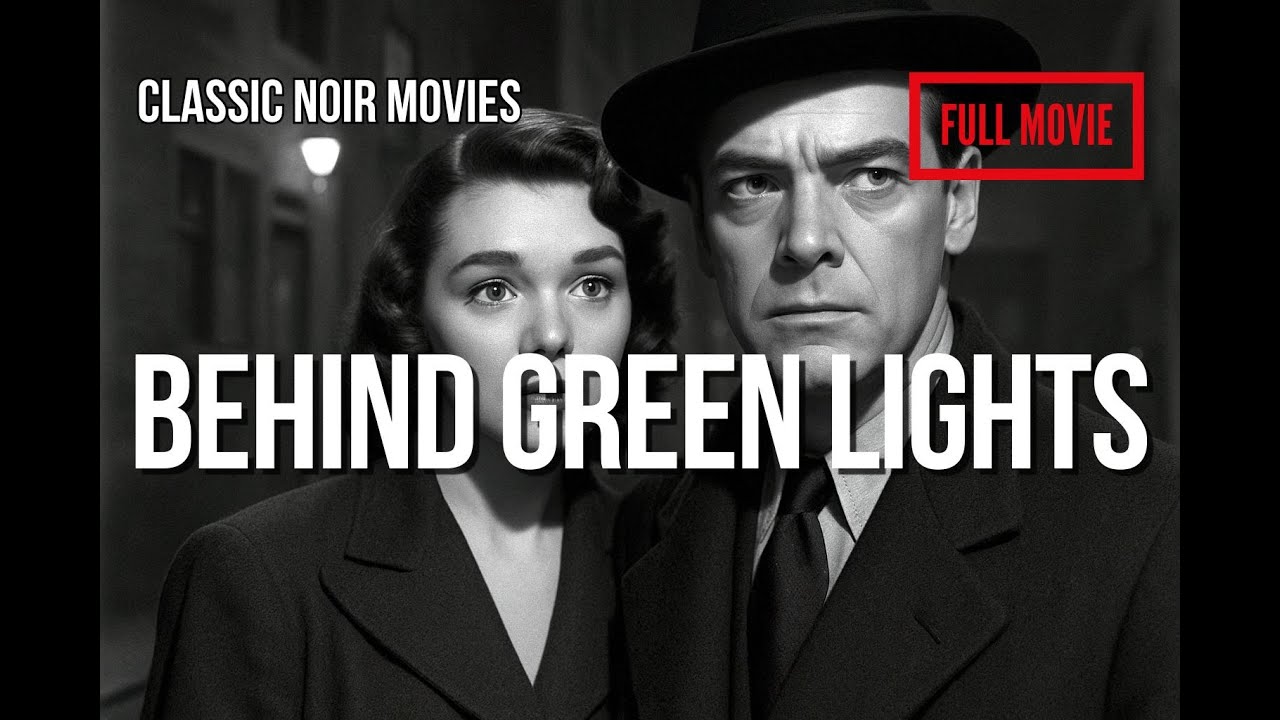
Behind Green Lights (1946) : A Tight Midnight Procedural
Released by 20th Century-Fox in 1946, Behind Green Lights is a lean, 64-minute crime thriller that operates right on the edge of classic film noir. Directed by Otto Brower, this movie completely strips away the usual sprawling cityscapes of the genre. Instead, it traps you inside a single, claustrophobic police precinct during one long, tense night shift.
The story hits the ground running when the dead body of Walter Bard—a sleazy private investigator and professional blackmailer—is found dumped in a car parked right outside the police headquarters. Talk about a bold move. The immediate prime suspect is Janet Bradley (played by Carole Landis), who happens to be the daughter of a high-profile political reform candidate. If she gets pinned for the murder, her father’s career is completely finished.
My favorite part of the script is how it handles the fallout: Lieutenant Sam Carson (William Gargan) gets stuck with the job of untangling this messy web. He has to balance the actual murder hunt while dodging corrupt city officials, shady precinct politics, and hungry reporters who want to use the corpse to rig the upcoming election.
In my opinion, the real star of the show here is Joseph MacDonald’s incredibly sharp cinematography. The intense interrogation scene where Landis is first questioned under the hot lights is a masterpiece of staging. MacDonald uses deep, heavy chiaroscuro lighting that perfectly catches the moral dilemma written all over Gargan’s face while completely swallowing the rest of the room in pitch-black shadow. It’s a fast-paced, beautifully cynical piece of post-war studio filmmaking that perfectly blends the heavy, paranoid atmosphere of noir with the rapid-fire dialogue of an old-school newsroom drama.
I hope you enjoyed my personal breakdown of this overlooked crime gem—dim the lights, hit play, and enjoy the movie!