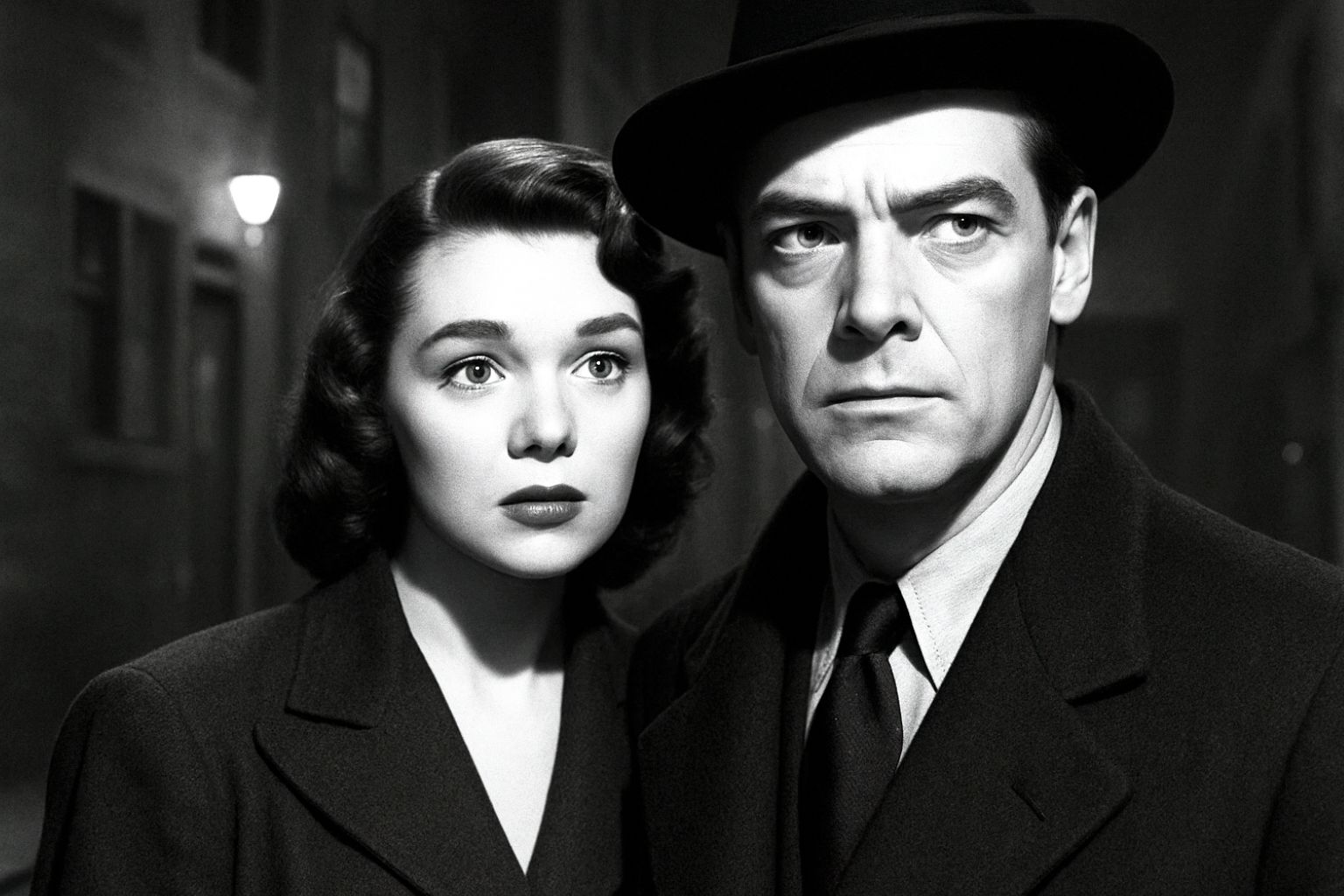
The Hollywood Strike Chaos of 1945
The production of Behind Green Lights was caught right in the middle of one of the most violent labor wars in Hollywood history—the 1945 Hollywood Black Friday strike. 20th Century-Fox was operating under extreme pressure as thousands of set decorators and crew members picketed outside the studio gates. To prevent union clashes from shutting down the film entirely, producer Robert Bassler had to rush the scheduling and minimize outdoor shooting, forcing the crew to build almost the entire police station on secure interior soundstages.
The Poverty-Row Brain Drain
Even though this was a major release distributed by 20th Century-Fox, the studio deliberately treated it like a high-speed B-movie. Fox actively poached W. Scott Darling—a screenwriter famous for churning out ultra-low-budget mystery scripts for Poverty Row studios like Monogram Pictures. The mandate from the studio heads was simple: deliver the script under a strict page count to ensure the final cut would fit a lightning-fast 64-minute runtime, maximizing the number of daily theater screenings.
The Budget & The Scrap “Precinct 33”
The film was shot under the working title Precinct 33, operating on a razor-thin budget. To save thousands of dollars in construction costs, Fox executives forced director Otto Brower to reuse standing prison and office sets leftover from older, high-budget studio dramas. The entire production design was an exercise in recycling, which inadvertently created the stark, claustrophobic, and cluttered environment that gives the movie its iconic, authentic police precinct atmosphere.
Randolph Scott and the Casting Shuffle
The film almost looked completely different. According to Hollywood Reporter production charts from August 1945, legendary Western icon Randolph Scott was originally signed and cast to play the hard-boiled lead role of Lieutenant Sam Carson. However, due to scheduling blockades caused by the ongoing studio strikes and sudden budget reallocations, Scott walked away from the project. William Gargan was brought in at the last minute as a cheaper, more traditional noir alternative.
Ghosts in the Credits
The chaotic nature of the shoot left visible scars in the final product. Studio records show that actors Reed Hadley and Henry Morgan were fully contracted, paid, and included in the official pre-production cast charts. Yet, due to frantic, last-minute script rewrites on the set to cut down shooting days, their characters were completely axed from the narrative. Despite being listed in initial studio papers, they do not appear in a single frame of the completed picture
Q: Was Behind Green Lights one of Carole Landis’s final films?
A: Yes. The lead actress tragically committed suicide just two years after the release of this film, making this gritty crime procedural one of the very last glimpses of her talent during Hollywood's golden era.

Q: How does the film break traditional Film Noir location tropes?
A: Instead of prowling rain-slicked neon streets, the entire narrative unfolds over the course of one intense night inside a single, claustrophobic police precinct, playing out more like a tense stage play.

Q: Did B-movie studios influence this major 20th Century-Fox release?
A: Absolutely. Fox actively brought in seasoned B-movie veterans from poverty-row studios like PRC. This crossover energy is why the film achieves its lightning-fast 64-minute runtime and snappy, cynical newsroom-style dialogue.

Q: Who actually directed the most atmospheric scenes in the movie?
A: While Otto Brower gets the official director credit, film historians confirm that legendary noir master Anthony Mann stepped in uncredited to direct several key overnight investigation sequences.

Q: Why was the title "Behind Green Lights" chosen for a crime film?
A: In the 1940s American police system, green lanterns or green lights were traditionally hung outside precinct entrances to signal a safe haven for citizens and a warning to criminals—a visual irony the film uses perfectly.