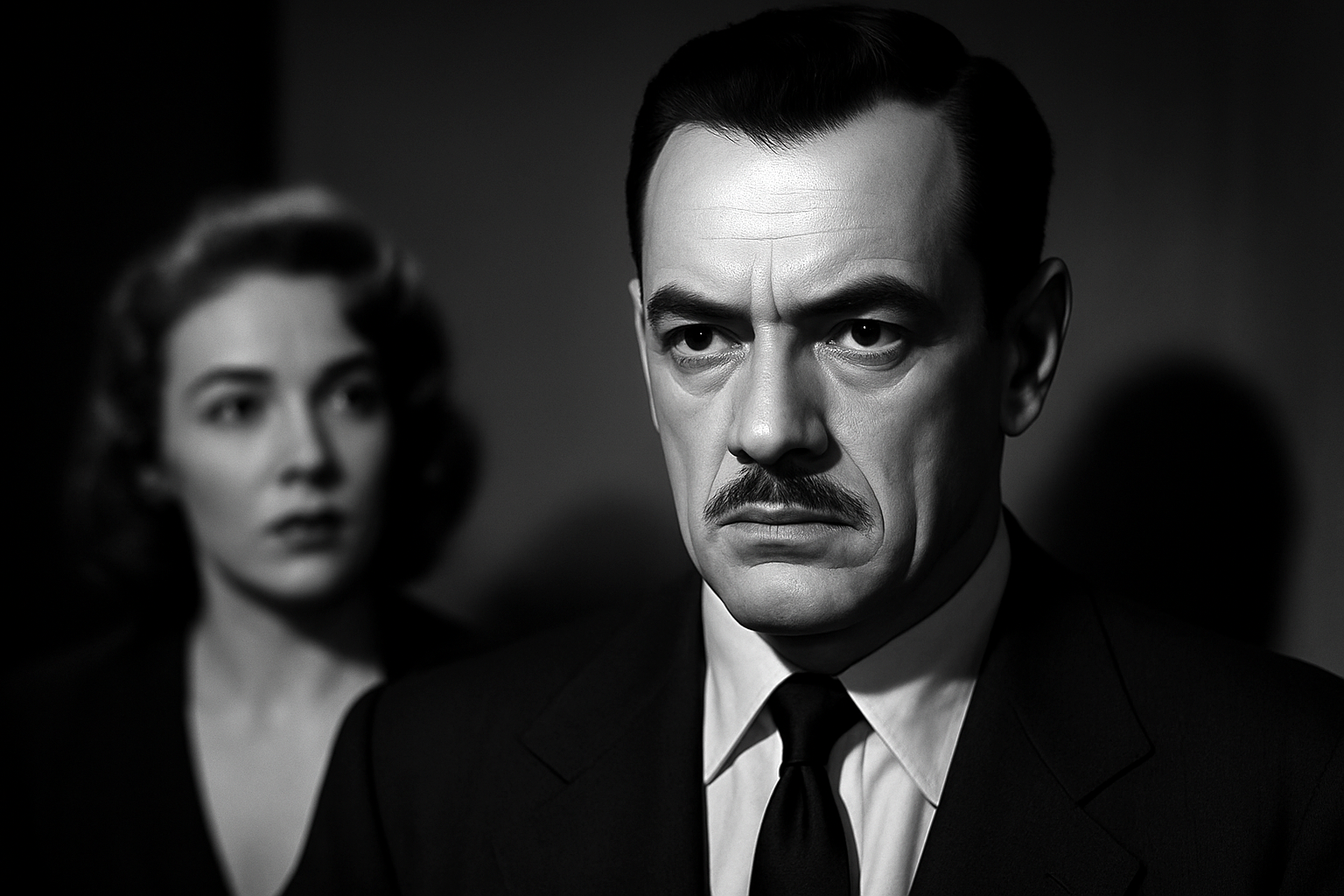
Cheap Sound Effects and Studio Cuts
Operating on a very tight budget, the audio department had to resort to desperate, cost-cutting measures. The sound recordist, John Kean, didn’t have the cash to capture original sound effects for the climactic, fog-drenched airport shootout. Instead, the crew simply recycled generic, old gunshot echoes and distant plane engine roars directly from the studio’s existing back-catalog libraries, stretching every single dollar to ensure the final sequence still felt monumental.
John Alton’s Dangerous Light Stunt
During the filming of the famous alleyway sequence, cinematographer John Alton wanted to push the high-contrast look to its absolute physical limits. Instead of using standard Hollywood soft fill lights, he placed a massive, unshielded carbon-arc spotlight directly at the end of the narrow studio corridor. The light was so powerful and intense that it began to melt the studio paint on the walls and forced the crew to wear protective welder’s goggles between takes to avoid flash blindness.
The Breen Office Censorship Battle
The production of The Big Combo faced a brutal, months-long war with the Production Code Administration, led by censor Joseph Breen. The board was deeply disturbed by the film’s explicit depictions of psychological torture and sadistic violence, particularly the infamous hearing-aid scene where the gangster Fante beats a helpless captive. To secure a theatrical release in 1955, Allied Artists executives had to significantly cut the length of the torture sequences and alter the audio mix to make the violence less visceral.
Cornel Wilde’s Severe On-Set Feud
The tension captured on screen between Lieutenant Diamond and the crime boss Mr. Brown was entirely real. Lead actor Cornel Wilde, who also partially financed the movie through his independent production company Theodora Productions, openly despised co-star Richard Conte’s acting methods on the set. Wilde repeatedly demanded that director Joseph H. Lewis rewrite scenes to diminish Conte’s screen time, but Lewis fiercely refused, using the real-life backstage animosity to fuel the raw hostility between their characters.
The Vanished Promotional Gallery
Initial studio marketing papers from early 1955 show that Allied Artists fully produced a massive gallery of stylized, low-key promotional portraits featuring actress Jean Wallace shrouded in heavy cigarette smoke. However, just days before the film’s distribution campaign launched across American theaters, the studio abruptly withdrew the entire portrait series. The official reason was never released, but rumor on the backlot suggested the imagery was deemed far too suggestive for mainstream newspaper advertisements at the time.
Q: What happened in the infamous hearing aid scene in The Big Combo?
A: It is one of the most sadistic moments in 1950s cinema. The mob boss, Mr. Brown, takes his thug’s hearing aid, puts it on a captured detective, and then his goons scream into the microphone before brutally beating him. The camera cuts away, but the audio distortion makes it feel incredibly violent for a 1955 movie.
Q: Was Cornel Wilde actually married to his co-star Jean Wallace?
A: Yes, they were married in real life during the shoot. Wilde was highly protective of her on set, which caused massive backstage drama. He used his power as a co-producer to ensure Wallace got the best close-ups and lighting, deeply annoying the rest of the cast.
Q: How did John Alton get that crazy airport fog effect at the end?
A: It wasn’t expensive Hollywood magic—it was pure low-budget improvisation. Alton used basic studio smoke machines and placed one single, massive spotlight directly behind the actors in an empty hangar. That iconic silhouette shot cost almost nothing but defined the visual style of late-era film noir.
Q: Why did the censors try to ban The Big Combo?
A: The Breen Office went crazy over the film’s hidden sexual undertones and psychological cruelty. Censors fought hard to cut a famous scene where Mr. Brown kneels down in front of Jean Wallace, implying an intimate act that was strictly forbidden by the Production Code at the time.
Q: Who plays the two hitmen Fante and Mingo?
A: They are played by Lee Van Cleef (before he became a Spaghetti Western star) and Earl Holliman. Their bizarre, overly close relationship and constant bickering on screen led many critics to view them as the first openly implied gay hitmen duo in American crime film history.